DOWNLOAD DATA
After receiving and reviewing your information, we will send you the relevant documents or reports.

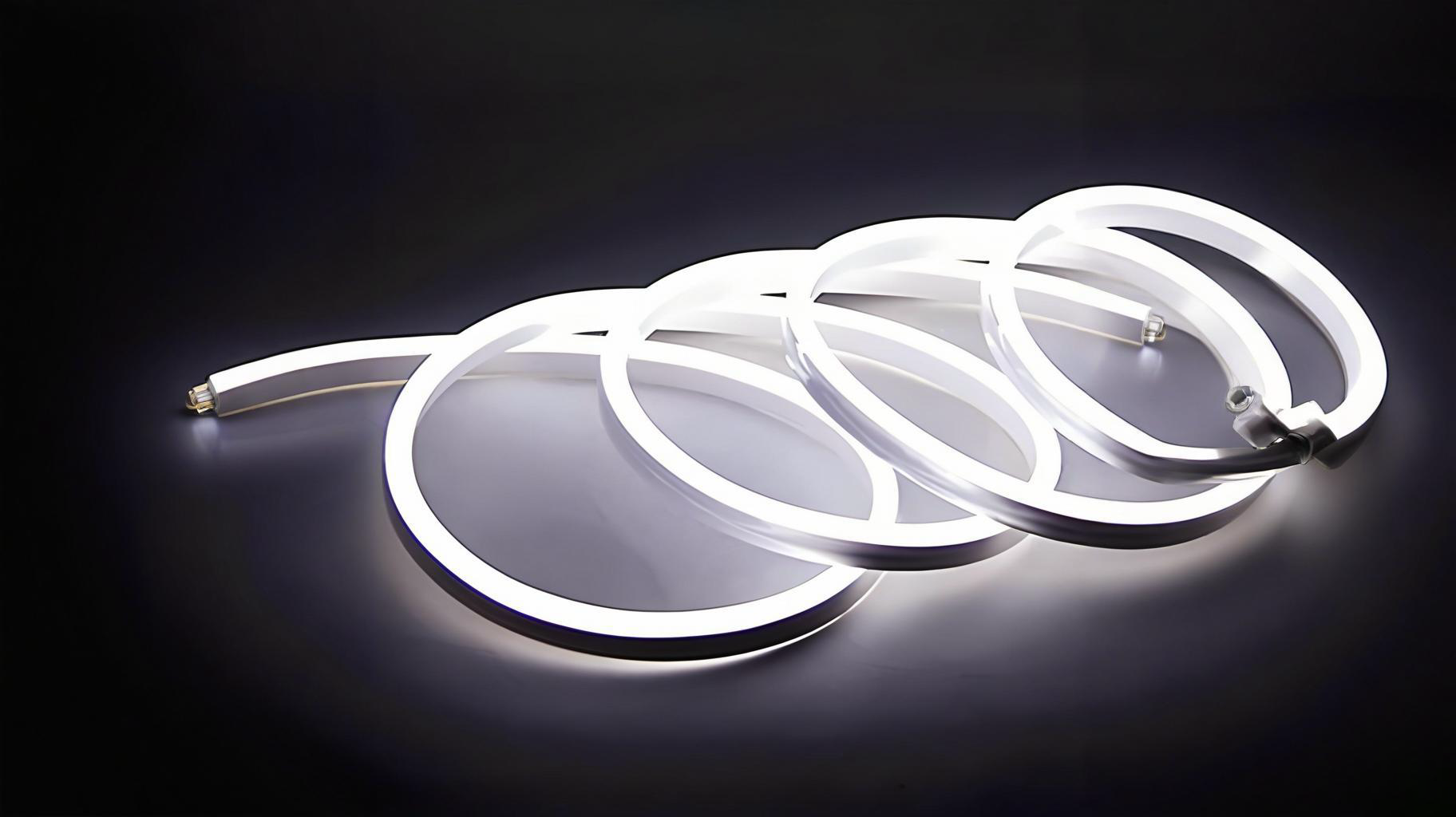
In recent years, silicone LED strips have evolved from simple decorative lighting accessories to high-performance, multi-scenario lighting solutions, driven by advancements in material science, encapsulation technology, intelligent control, and energy efficiency. As a core component in modern architectural, residential, commercial, and industrial lighting, their technological upgrading focuses on enhancing flexibility, durability, light quality, and smart integration, while aligning with global sustainability goals.
This article explores the latest technological breakthroughs and development trends of silicone LED strips, shedding light on how they redefine the boundaries of lighting applications.
The performance of silicone LED strips is fundamentally determined by the quality of the silicone encapsulation material. Recent years have witnessed remarkable progress in silicone material formulation, moving beyond basic protection to multi-functional optimization.
Platinum-cured silicone has become the preferred material for high-end applications, thanks to its superior thermal stability (withstanding -60°C to 230°C), excellent chemical resistance, and UV stability. Unlike traditional tin-cured silicone, it features low shrinkage during curing, no toxic byproducts, and exceptional anti-yellowing properties, ensuring long-term clarity and performance even in harsh outdoor environments such as deserts or coastal areas exposed to salt spray. For cost-sensitive indoor applications, improved tin-cured silicone variants have been developed to enhance UV resistance and lifespan, narrowing the performance gap with platinum-cured alternatives while maintaining affordability.
Another key innovation is the adoption of fumed silicone, which enables 360° uniform light emission and superior flexibility. This material, combined with specialized formula, achieves up to 95% light transmittance, minimizing light loss and ensuring consistent illumination without dark spots. Additionally, food-grade and eco-friendly silicone materials have become mainstream, complying with international standards such as RoHS and DIN EN ISO 10993, making them suitable for sensitive environments like food factories, hospitals, and residential spaces with children and pets.
Encapsulation technology is critical for protecting LED chips and ensuring stable performance. The latest advancement in this field is the “amber sealing” vacuum casting and curing process, which fully encapsulates LED chips, PCB boards, and resistors in a solid, seamless silicone matrix, forming an integrated “silicone brick” that completely isolates internal components from the external environment. This technology achieves IP68 waterproof rating, enabling long-term underwater operation and buried installation, while providing exceptional resistance to physical impact, compression, and tearing—making it ideal for outdoor buried lighting, pool lighting, and industrial applications.
For professional lighting scenarios, the combination of COB (Chip-on-Board) technology and silicone encapsulation has become a game-changer. By directly bonding LED chips to flexible substrates and applying secondary silicone encapsulation (tubing potting and extrusion molding), this synergy eliminates the “dot effect” of traditional SMD strips, delivering ultra-uniform, soft illumination with a wide beam angle (up to 150°). Moreover, advanced encapsulation processes ensure 100% bubble-free protection, passing rigorous QC inspections to achieve military-grade durability (MIL-STD-810G certification) and thermal conductivity of ≥1.5 W/mK, effectively reducing thermal stress and extending LED lifespan.
The core lighting performance of silicone LED strips has been significantly improved through innovations in LED chips and circuit design. The latest SMD 2025 chips, with a density of 240 pieces per meter, deliver luminous efficiency of ≥90 lm/W and a high Color Rendering Index (CRI) of ≥85 (up to 97 for high-end models), ensuring true-to-life color reproduction for both residential and commercial applications. These chips consume only 10W per meter, achieving up to 70% energy savings compared to traditional neon or fluorescent lighting.
Circuit design has also made great strides in solving voltage drop issues, a long-standing challenge for long-distance installations. By adopting 2oz/3oz thick rolled copper PCBs or 18/50 μm double-sided copper-plated boards, conductivity is improved by 20%, reducing voltage drop to less than 50% of traditional products. This allows silicone LED strips to maintain uniform brightness over 30 meters without additional power supplies, making them suitable for large-scale architectural lighting and commercial spaces such as shopping malls and stadiums. Additionally, 18/70 copper electroplated PCBs enhance heat dissipation and tensile strength, further extending the service life to up to 50,000 hours (L70 standard).
Intelligent integration has become a key trend in the development of silicone LED strips, transforming them from passive lighting tools to active participants in smart spaces. The latest strips are equipped with versatile controllers (WiFi, Bluetooth, ZigBee) that enable seamless connection to smart home systems, supporting remote control, dimming (0-100% stepless adjustment), color tuning (monochrome, RGBIC gradients), and dynamic mode switching (flash, gradient, music synchronization) via mobile apps or voice assistants (e.g., Alexa, Xiao Ai).
Innovative control methods such as touch and hand scan have been introduced for scenario-specific applications. For example, kitchen and wardrobe LED strips can be activated by waving a hand within 2cm or short-pressed to turn on/off, enabling hands-free operation and enhancing user convenience. Moreover, smart linkage with sensors (human body sensors, light sensors) allows adaptive lighting: corridor strips automatically turn on when someone passes by and turn off after inactivity, while light sensors adjust brightness based on ambient light intensity, further improving energy efficiency and user experience.
As sustainability becomes a global priority, silicone LED strips are evolving to meet eco-friendly requirements. Manufacturers are adopting recyclable silicone materials free from toxic substances such as mercury and lead, reducing environmental impact throughout the product lifecycle. The long operational life (up to 50,000 hours) minimizes replacement waste, while low-voltage (12V/24V) design reduces power consumption by up to 60% compared to traditional lighting, lowering carbon footprints.
Furthermore, the integration of smart control and energy-efficient chips enables on-demand lighting, avoiding unnecessary energy waste. Many products have obtained international certifications such as CE, RoHS, and ErP, ensuring compliance with environmental standards in European, North American, and other global markets, and catering to the growing demand for sustainable lighting solutions.
Driven by technological advancements, the application scope of silicone LED strips has expanded from traditional residential decoration to professional fields such as architectural lighting, industrial lighting, and automotive modification. In architectural design, their exceptional flexibility allows them to conform to curved surfaces, irregular geometries, and organic shapes, perfect for outlining building contours, accentuating sculptural installations, and creating immersive lighting art in commercial spaces and urban landscapes.
In extreme environments, silicone LED strips withstand temperatures ranging from -40°C to 200°C (even -50°C to 200°C for high-end models), making them suitable for cold storage, outdoor landscapes in frigid regions, and industrial settings with high temperatures or chemical corrosion. They are also widely used in underwater lighting (pools, fountains), (car chassis, body contours), and high-loss commercial areas (bar counters, stair handrails), thanks to their IP67/IP68 waterproof rating and physical durability.
The latest development technologies of silicone LED strips revolve around material upgrading, encapsulation innovation, chip and circuit optimization, intelligent integration, and sustainability. From platinum-cured silicone and vacuum casting encapsulation technology, smart control, and eco-friendly design, these advancements have significantly enhanced the performance, durability, and versatility of silicone LED strips, expanding their application scenarios and meeting the diverse needs of modern lighting. As technology continues to evolve, future silicone LED strips will likely move towards higher energy efficiency, more precise intelligent control, and deeper integration with smart ecosystems, playing an increasingly important role in shaping the future of lighting.